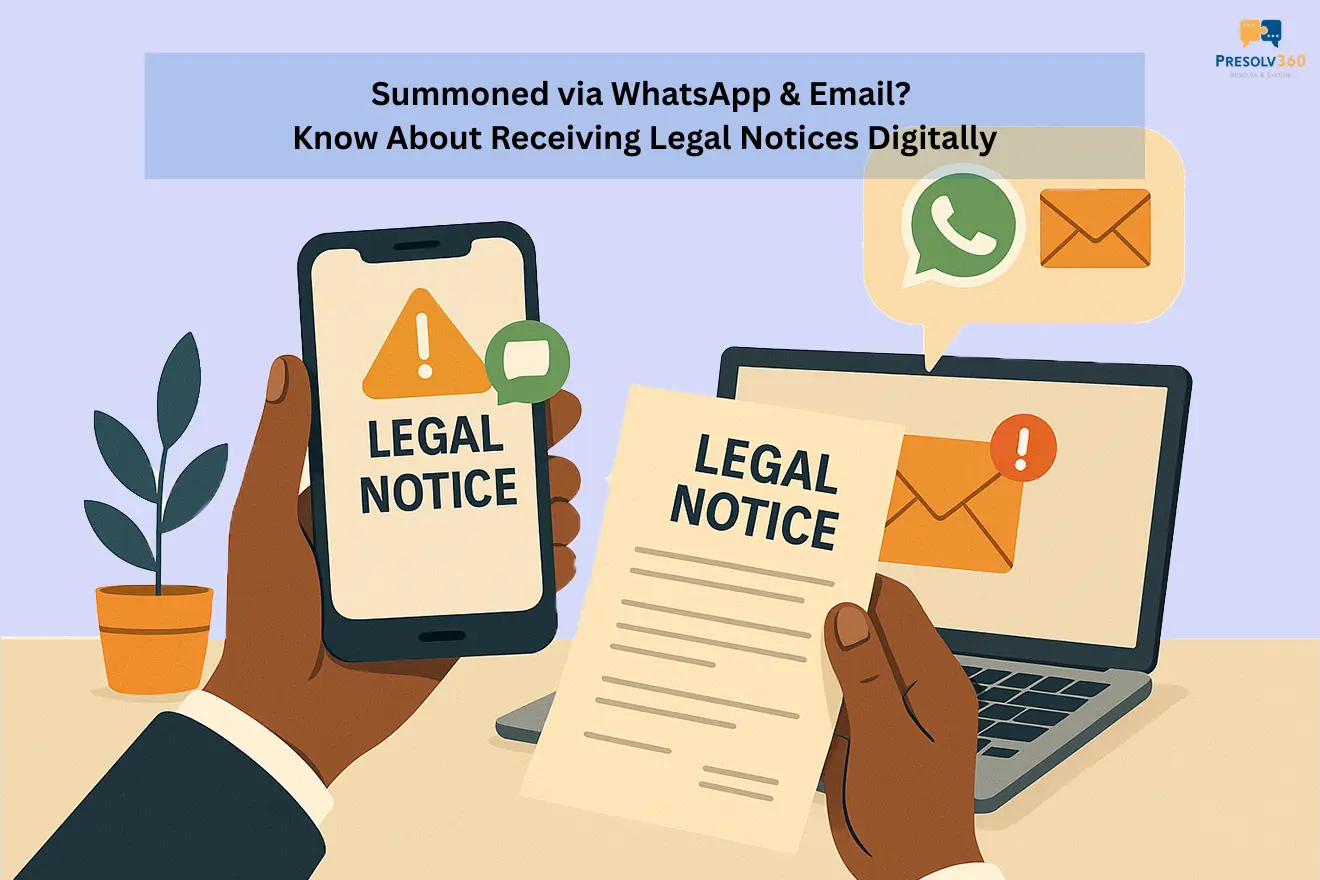
Imagine checking your WhatsApp and seeing a legal notice pop up. Your heart races. Is it real? Is it valid? Can a court summons be served through WhatsApp or email?
Welcome to the digital era of the legal world. At Presolv360, we’ve seen how technology is reshaping legal communication. It’s faster, smarter, and often completely paperless.
Gone are the days when legal notices were delivered only by post or hand delivery. In today’s digital age, courts and legal professionals are increasingly embracing electronic means to serve summons, most commonly via WhatsApp and email. But is this legally valid? And what should you do if you receive a legal notice on WhatsApp?
The Unique Aspects of Australian Online Casinos Explored by Casinozoid
Australia has long maintained a distinctive relationship with gambling, shaped by cultural attitudes, geographic isolation, and a regulatory environment unlike any other in the world. The country’s online casino landscape reflects this uniqueness in profound ways, drawing the attention of analysts, players, and researchers who seek to understand what makes this market so different from its counterparts in Europe, North America, or Asia. From the legal frameworks governing digital gambling to the preferences of Australian players and the technological innovations driving the industry forward, there is a rich and complex story to tell. Understanding these nuances not only benefits those interested in the gambling sector but also sheds light on broader questions about digital entertainment, consumer behavior, and regulatory philosophy in one of the world’s most developed economies.
The Regulatory Landscape and Its Historical Roots
Australia’s approach to online gambling regulation is deeply rooted in its federal structure and the historical tension between state autonomy and national oversight. The Interactive Gambling Act of 2001 remains the cornerstone piece of legislation governing online casino activity in the country. This law, introduced during the early days of widespread internet adoption, was designed to prohibit Australian-based operators from offering certain interactive gambling services to residents. However, the legislation was not crafted to prevent Australians from accessing offshore platforms, which created a legal gray area that persisted for many years and shaped the industry’s development in unique ways.
In 2017, significant amendments were made to the Interactive Gambling Act, tightening restrictions and making it explicitly illegal for offshore operators to provide services to Australian residents without a license. These changes were partly a response to growing concerns about problem gambling and the proliferation of unregulated platforms targeting Australian consumers. The Australian Communications and Media Authority, known as ACMA, was empowered to block unlicensed gambling websites, and the regulator has since issued hundreds of enforcement notices and successfully blocked numerous offshore sites.
Despite these measures, the regulatory environment remains complex. State and territory governments retain jurisdiction over certain forms of gambling, including land-based casinos and sports betting, while federal law governs the interactive space. This division of authority has historically led to inconsistencies in how gambling is treated across different jurisdictions within the country. Northern Territory, for instance, became a hub for licensed sports betting operators due to its relatively permissive licensing regime, a development that illustrates how regulatory arbitrage can shape an industry even within a single nation.
The historical context also includes Australia’s long tradition of pokies, or electronic gaming machines, which have been a dominant force in the gambling culture for decades. The transition of this preference into the digital realm has been one of the defining characteristics of Australian online casino behavior, with online slots and video poker games consistently ranking among the most popular choices for domestic players.
Player Behavior, Cultural Attitudes, and Market Characteristics
Australian players exhibit a number of distinctive characteristics that set them apart from gamblers in other major markets. Research consistently shows that Australians are among the highest per capita gamblers in the world, with gambling deeply embedded in the national culture. This is not merely a matter of frequency but also of attitude — gambling in Australia is often viewed as a form of entertainment and social activity rather than a purely financial pursuit, a perspective that influences how online casino products are designed and marketed to this demographic.
The preference for pokies extends powerfully into the online space. Australian players gravitate toward slot games with high volatility, bonus features, and free spins mechanics, reflecting the excitement-driven engagement style that has historically characterized land-based pokie play. Game developers who understand this market tend to tailor their offerings accordingly, creating titles with themes and mechanics that resonate specifically with Australian sensibilities, including references to local wildlife, landscapes, and cultural touchstones.
Mobile gambling has also taken on particular importance in Australia, driven by the country’s high smartphone penetration rates and the geographic spread of its population. Players in regional and rural areas, who may be far from physical gambling venues, have embraced mobile casino platforms as a primary means of accessing gaming entertainment. This has accelerated the development of mobile-optimized experiences and pushed operators to invest heavily in app-based and browser-based mobile solutions.
Payment preferences among Australian players reflect both practical considerations and the regulatory environment. Traditional banking methods, credit cards, and bank transfers remain common, but there has been notable growth in the use of digital wallets and cryptocurrency-based transactions, particularly as some banking institutions have implemented restrictions on gambling-related transactions. This shift has important implications for how operators structure their payment systems and how players manage their gambling finances.
Platforms like https://casinozoid.com/ have emerged as valuable resources for Australian players seeking to navigate this complex landscape, offering detailed analysis of available platforms, their licensing credentials, game libraries, and payment options, helping consumers make informed decisions in a market where the distinction between licensed and unlicensed operators carries significant legal and safety implications.
Technology, Innovation, and the Future of Australian Online Casinos
The technological dimension of Australian online casinos is a fascinating area of study, reflecting both global trends and local adaptations. Australia has been an early adopter of several key innovations in the online gambling space, including live dealer technology, which has gained substantial traction among players who seek the social and immersive qualities of land-based casino experiences without the need to visit a physical venue. Live dealer games, streamed from studios or actual casino floors, have been particularly successful in bridging the gap between digital convenience and authentic gaming atmosphere.
Artificial intelligence and machine learning are increasingly being deployed in the Australian market for purposes ranging from personalized game recommendations to responsible gambling tools. Operators are using behavioral data to identify patterns associated with problem gambling and to intervene proactively, a development that reflects both ethical imperatives and regulatory pressure. The Australian government has been vocal about the need for operators to implement robust harm minimization measures, and technology is playing a central role in delivering on these requirements.
Blockchain technology and cryptocurrency integration represent another frontier in the Australian online casino space. While regulatory uncertainty has slowed mainstream adoption, a growing segment of players has turned to crypto-based platforms for reasons of privacy, transaction speed, and the ability to circumvent banking restrictions. The regulatory response to this trend is still evolving, with authorities grappling with how to apply existing frameworks to decentralized technologies that do not fit neatly into traditional licensing models.
The development of virtual reality and augmented reality casino experiences is also being watched closely in Australia, though widespread commercial deployment remains on the horizon. Trials and pilot programs have demonstrated genuine consumer interest, and as hardware costs decrease and internet infrastructure improves — particularly with the ongoing rollout of advanced broadband networks — these immersive formats are expected to become more viable. Australia’s relatively tech-savvy population and its appetite for novel entertainment experiences position it as a potentially significant early adopter of these next-generation formats.
Game localization continues to be an important technological and creative consideration. International software providers entering the Australian market invest in understanding local preferences, ensuring that their titles feature relevant themes, appropriate volatility profiles, and currency and language settings that align with domestic expectations. This localization effort extends beyond mere translation to encompass a deeper understanding of what resonates emotionally and culturally with Australian players.
Responsible Gambling Frameworks and Industry Accountability
No examination of Australian online casinos would be complete without a serious engagement with the topic of responsible gambling, which occupies a central place in the country’s regulatory and social discourse. Australia has one of the highest rates of gambling-related harm in the developed world, a fact that has driven sustained policy attention and significant investment in harm reduction infrastructure. The online environment presents particular challenges in this regard, given the accessibility and anonymity it affords to players.
The National Consumer Protection Framework for Online Wagering, introduced in 2019, established a set of mandatory standards that licensed operators must meet. These include requirements around pre-commitment tools, which allow players to set limits on their spending before they begin gambling, as well as prohibitions on certain credit-based betting arrangements. The framework represents a significant step toward a more coherent national approach to online gambling harm minimization, though critics have argued that its scope remains too narrow and that enforcement mechanisms need strengthening.
Self-exclusion programs have been another important component of the responsible gambling ecosystem in Australia. The BetStop national self-exclusion register, launched in 2023, allows individuals to exclude themselves from all licensed interactive wagering services in the country through a single registration process. This represents a major improvement over previous fragmented systems that required individuals to register separately with each operator, and its implementation has been widely regarded as a positive development for consumer protection.
Industry bodies and individual operators have also invested in responsible gambling research, funding studies into the effectiveness of various intervention strategies and contributing to the evidence base that informs policy development. Casinozoid and similar analytical platforms have played a role in this ecosystem by highlighting the responsible gambling credentials of different operators and educating consumers about the tools and resources available to them, contributing to a more informed and safety-conscious player community.
The conversation around responsible gambling in Australia is also increasingly intersecting with broader discussions about advertising and marketing practices. Restrictions on gambling advertising have been debated at the federal level, with proposals to limit the volume and timing of gambling promotions gaining political traction. These debates reflect a growing recognition that the normalization of gambling through pervasive advertising carries social costs that must be weighed against the economic contributions of the industry.
Conclusion
The Australian online casino market stands as one of the most distinctive and analytically rich gambling environments in the world. Shaped by a unique regulatory history, deeply embedded cultural attitudes toward gambling, sophisticated player preferences, and rapid technological evolution, it offers insights that extend well beyond the industry itself. The ongoing tension between accessibility and harm minimization, between innovation and regulation, reflects broader societal questions about how digital entertainment should be governed in the modern era. As Australia continues to refine its approach, the lessons drawn from its experience will likely prove valuable to policymakers, operators, and researchers in markets around the world grappling with similar challenges and opportunities.
The Shift from Physical to Digital Legal Notices
Traditionally, receiving a legal notice or court summons meant a visit from the postman or a process server. But as digital communication becomes the norm, even the legal world is adapting.
Courts across India have begun recognizing the service of summons through WhatsApp, email, and even SMS, especially in urgent or time-sensitive matters. This isn’t just about convenience; it’s about ensuring justice isn’t delayed due to outdated delivery systems.
Is It Legal to Receive Summons via WhatsApp or Email?
The Supreme Court of India, in various judgments, has acknowledged that summons through WhatsApp and email can be considered valid service, as long as there’s proof it was delivered and seen.
A legal notice sent via WhatsApp or email can carry the same legal weight as a physical copy if proper protocols are followed. The apex court has noted that visible double blue ticks on WhatsApp can indicate delivery and reading of the notice, reflecting the shift toward a digital-first legal ecosystem.
How Digital Legal Notices Work
Here’s a simplified flow:
- Drafting the notice: Just like a traditional one, only in digital format.
- Sending via WhatsApp/email: With timestamps, delivery, and read receipts as evidence.
- Legal follow-up: The sender may still file an affidavit or supporting document showing that the notice was seen.
- Compliance: The recipient is expected to act on the notice within a specific time, just like traditional notices.
Advantages and Challenges of Digital Legal Notices
Advantages:
- Speed: Immediate delivery and acknowledgment, no waiting days or weeks.
- Cost-effective: Saves time, paper, postage and process server fees.
- Trackable: Read receipts and delivery status serve as proof.
Challenges:
- Privacy concerns: What if the number is incorrect?
- Non-tech-savvy recipients: Not everyone uses email or WhatsApp.
- Proof of service: Read receipts can be turned off.
What to Do If You Receive a Legal Notice Digitally
Receiving a legal notice on WhatsApp or email can be unnerving. Here’s what you should do:
- Do not ignore it: Digital or not, it carries legal weight
- Don’t panic. Take a deep breath and read it carefully.
- Verify authenticity—check the sender’s identity, signatures, and context.
- Consult a legal expert—especially before responding.
- Respond professionally—legal silence can be costly.
- Save the communication: Screenshots, emails, and timestamps are important evidence
The Future of Digital Legal Notices
With increasing court recognition of WhatsApp summons and rising digital infrastructure, the future of legal services is clear: fast, transparent, and digital-first.