Introduction
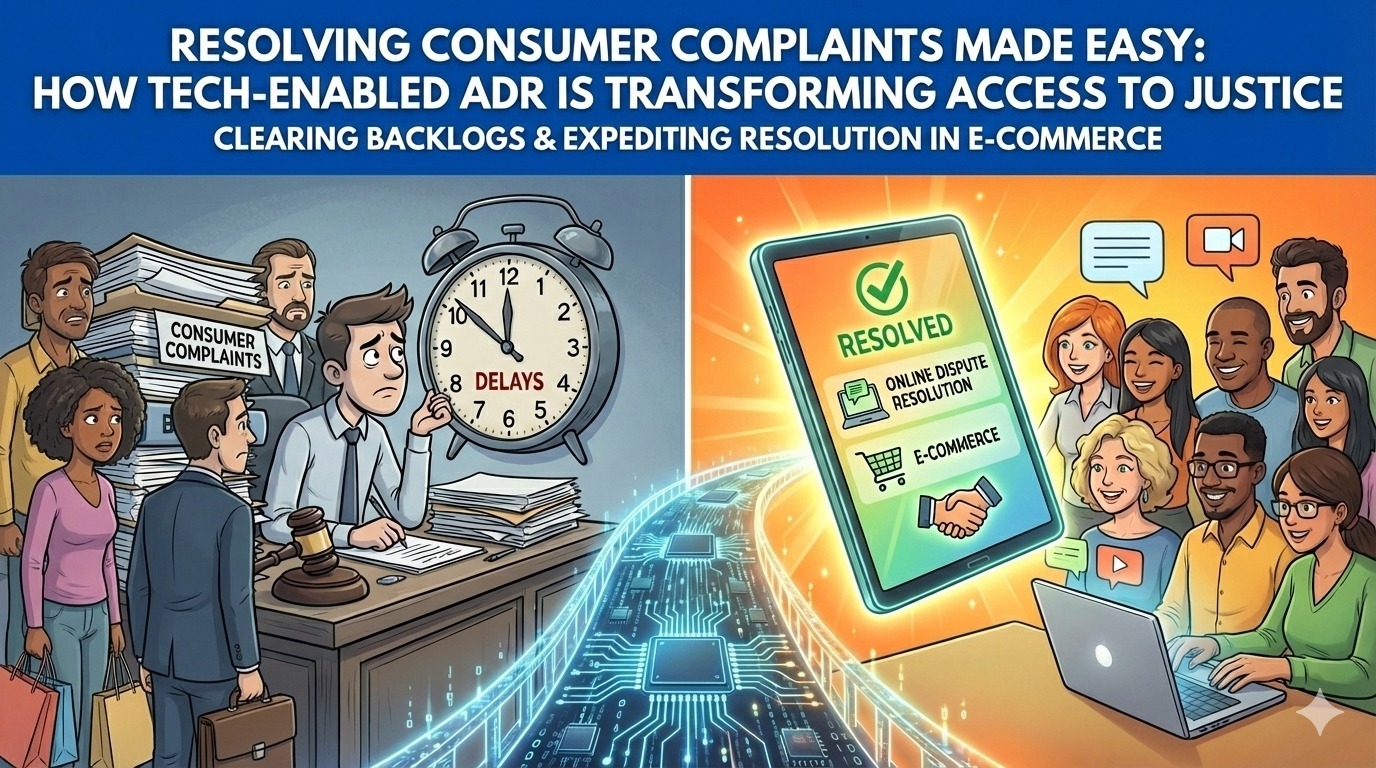
There has been a rapid increase in consumer disputes across sectors such as e-commerce, banking and insurance. Consumers who approach the court for dispute resolution are caught in a web of inconsistencies due to mounting backlogs, high costs, frequent adjournments and travel burdens. As of July 2025, consumer commissions recorded 78,031 complaints, with 65,537 disposed and 12,494 complaints pending.
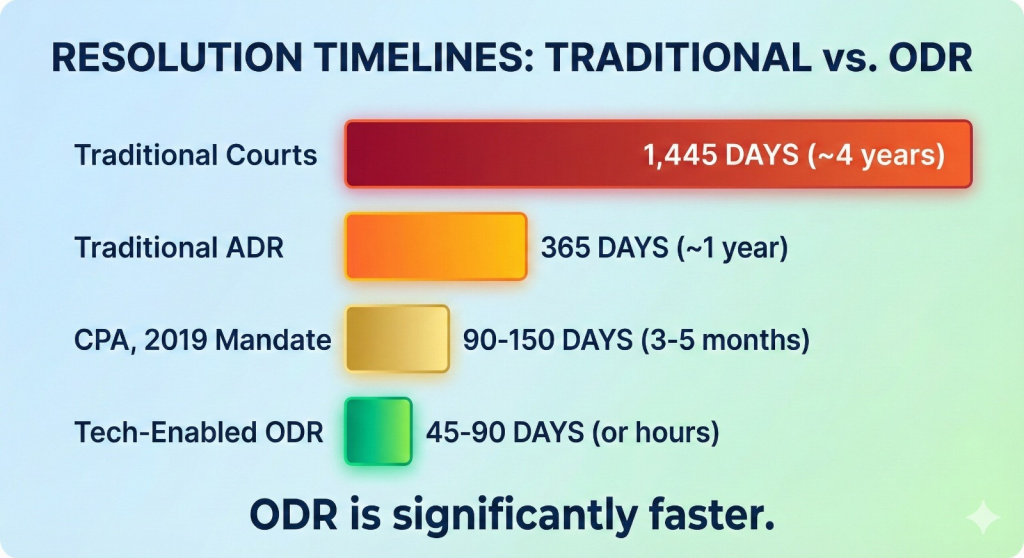
Traditional mechanisms of dispute resolution such as courts and ADR take 1,445 days and nearly a year (365 days), respectively to resolve disputes. This is in contrast to Section 38(7) of the Consumer Protection Act, 2019 (“Act”) which mandates that disputes are required to be resolved within 3 months (90 days) and 5 months (150 days) if the testing/analysis of goods is required. This exposes businesses to the risk of non-compliance, customer dissatisfaction and poor brand trust.
Technology-enabled ODR offers an attractive and time sensitive method to resolve such disputes. ODR leverages tools such as virtual meetings, unified document exchange and smart case management to provide speedy dispute resolution. By utilizing technology, ODR is able to compress the otherwise prolonged timelines to approximately 45 – 90 days, reducing the risks that such enterprises face.
The article builds a case for resolving consumer complaints through ODR. Furthermore, the article will also analyze how policy reforms and measures align with ODR and identify future trends such as AI-assisted mediation and public-private collaboration to deepen ODR’s role within India’s consumer justice architecture. For the scope of this article, “consumer disputes” are disputes such as product defects and insurance claims. These disputes are usually small value disputes.
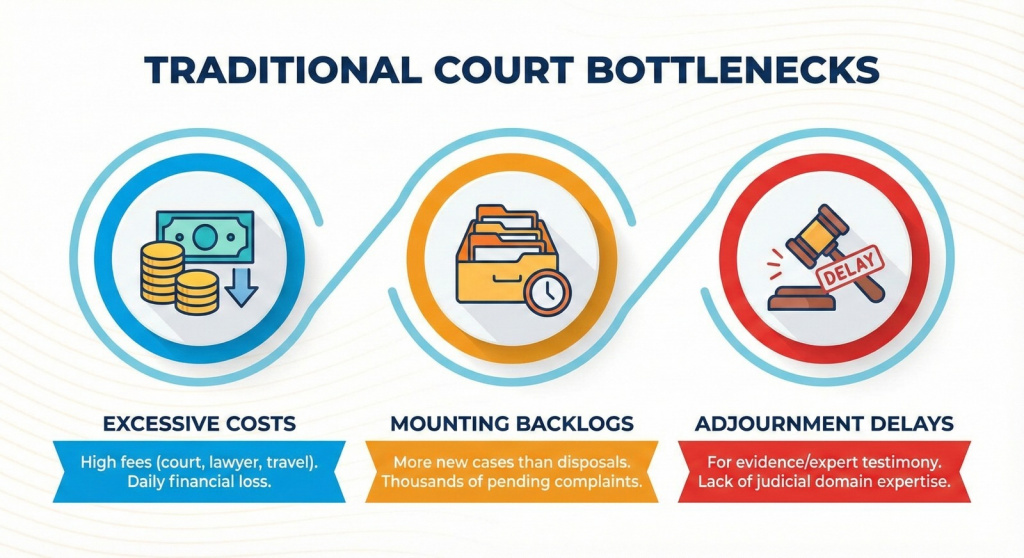
Consumers usually face two bottlenecks when approaching consumer commissions for redressal:
- High Costs – Consumers often incur high costs during a dispute such as court expenses, filing and travel charges, lawyer fees and paper expenses. In a survey by Daksh, it was found that civil litigants incurred a cost of Rs 497 and experienced a loss of wages of Rs 844 per day.
- Backlogs and Delays – In 2024, the commissions across the district, state and national levels received 1.73 lakh fresh cases but disposed of 1.58 lakh cases leading to a net increase of 14,900 cases. This trend carried forward in 2025 as well with a backlog of 12,494 complaints. Furthermore, adjournments sought by parties and their representatives further delay such cases. In order to remedy this under Section 38(7) of the Act, adjournments can be granted only when sufficient cause is shown and such reasons are recorded in writing. Adjournments are granted for submitting additional evidence, late filing of affidavits and expert testimony for specialized areas.
ODR Platforms: How they change the game
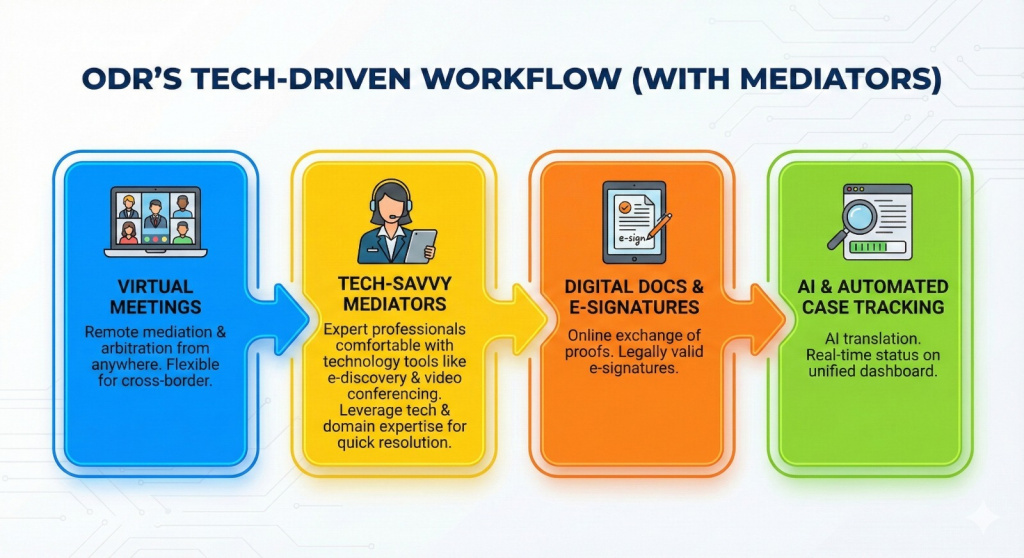
ODR platforms are able to resolve disputes approximately within 45 – 90 days and sometimes even hours in the case of small value disputes. These platforms employ tech-driven workflows such as virtual meetings (Online mediation, arbitration and negotiation), digital document exchange and e-signature and automated case tracking.
Tech-driven workflows that are employed by ODR platforms usually consist of:
- Video Conferencing (Virtual Meetings) – ODR platforms allow meetings to occur virtually in cases of arbitration, mediation and negotiation. This provides convenience for the consumer and enterprises to attend such meetings from anywhere and reduces travel costs. Video conferencing provides flexibility, especially in cross-border consumer disputes in e-commerce where buyers and sellers are located in different cities/countries. The concept of video conferencing emerged during the Covid-19 pandemic when courts could no longer operate physically, marking the first widescale technology adoption by the legal industry.
- Digital Document Exchange and E-Signatures – ODR allows documents to be exchanged over email or a unified platform (ODR service provider’s platform). Documents such as payment receipts, bank statements, warranty card, Aadhar (Proof of Identity and Photos of damaged products can be exchanged online. Furthermore, if parties to a dispute reach an agreement, such an agreement (settlement) can be signed online with an e-signature. Section 5 of the Information Technology Act, 2000 recognizes electronic signatures as legally valid. This reduces paperwork costs and ensures that the agreement can be drafted and edited quickly instead of back-and-forth paper-based workflows.
- Mediators/Negotiators – ODR platforms employ arbitrators and mediators who not only understand law but are comfortable in using technology tools like e-discovery, digital contracts and video conferencing. These platforms have to employ professionals with proficiency in a variety of areas such as domain expertise, technology tools and legal acumen. These professionals leverage technology tools and domain expertise to ensure that disputes are resolved quickly. However, in courts judges are usually not experts in domains requiring expert testimony that usually leads to adjournments.
- AI tools and Automated Case Tracking – ODR platforms can utilize AI-driven tools to translate documents from different languages since consumers and enterprises could be from different countries/cities. Furthermore, ODR platforms allow consumers to track the status of complaints online in a unified dashboard instead of travelling to court every time to get an update.
Policy Measures to Support ODR
- Consumer Protection (E-Commerce) Rules, 2020 – The consumer protection rules notified in 2020 were a step forward to ensure robust grievance redressal systems by e-commerce entities. According to these rules, every e-commerce entity has to appoint a grievance officer and display their contact details in the platform. Furthermore, in cases of a complaint the grievance officer has to acknowledge receipt of such complaints within 48 hours and resolve it within a month. These rules do not explicitly identify ODR for resolving consumer disputes. However, these rules create incentives for e-commerce entities to ensure speedy justice for consumers. ODR acts as the best method for such disputes to comply with statutory guidelines.
- Mediation under the Act – The Act has statutorily mandated the establishment of consumer mediation cells by the state governments for district and state commissions while the central government sets it up for national commissions under Section 74. These cells would constitute a panel of mediators that would facilitate parties to reach a mutually beneficial out-of-court settlement.
- Government Initiatives – The Department of Consumer Affairs has launched many initiatives to improve access to justice for consumers by integrating technology. The following are of some of the key initiatives:
- E-Jagriti – The e-jagriti portal was launched by the government on 1st January, 2025 to streamline consumer grievance redressal into a single, unified platform. The platform allows consumers to file complaints, participate in virtual hearings, make payments and monitor case progress. The portal offers multilingual support, chatbot assistance, voice-to-text features and secure payment gateways. These technological integrations have improved the disposal rate with 10 states and the NCRDC recording disposal rate exceeding 100%. For example, during September and October of 2025 24,504 cases were disposed of, against 21,592 newly filed.
- National Consumer Helpline (NCH) 2.0 – The Department of Consumer Affairs has upgraded the NCH using AI to offer access to information, multilingual assistance. The number of calls received by NCH has grown nearly tenfold, from 12,553 calls in December 2015 to 1,55,138 calls in December 2024. The NCH has facilitated a refund of Rs 27.61 crores to consumers between 25th April and 31st October 2025, effectively addressing 49,333 consumer grievances across 30 sectors.
- Jago Grahak Jago Portal and Mobile App – The Department of Consumer Affairs has deployed an advanced, real-time intelligent system powered by the Airawat AI Supercomputer. This initiative aims to detect deceptive online practices and safeguard consumer rights through a suite of digital tools. This initiative by the government uses a variety of tools and apps to mainly combat dark patterns.
Future Trends
- AI-Assisted Mediation – AI tools excel at analyzing and sifting through large volumes of documents. These tools can act as assistants to mediators promoting efficiency and allow them to frame questions that help them in discovering the parties’ underlying interests and predicting settlement numbers. For example, an experienced mediator Myer Sankary used ChatGPT to propose a settlement number in a case involving the wrongful termination of a lease.
- Public-Private Collaboration – In the upcoming years, we will see more cases being referred to ODR by the courts. Enterprises will integrate ODR as part of their grievance redressal workflows to ensure compliance, protection reputation and boost consumer satisfaction. ODR platforms, regulators and courts will work together to reduce the consumer court pendency with high-value disputes going towards courts while small-value disputes would be referred to ODR. [AS1] The government and judiciary have adopted a forward outlook towards ODR through the Arbitration (Amendment) Bill, 2024 which expressly incorporates online hearings in arbitral proceedings. This trajectory appears promising and transformative for consumer justice.
Conclusion
Consumer disputes are rising creating the need for speedy dispute resolution. The persistent gap between statutory timelines and resolution often leads to businesses facing risks such as non-compliance, customer dissatisfaction and the erosion of brand trust. Tech-enabled ODR provides the opportunity to compress timelines and boost consumer trust.
Tech-enabled ODR does not replace courts but allows them to focus on high-value consumer disputes that require their expertise. The emergence of unified ODR platforms, policy and regulatory reforms and government initiatives suggest that ODR for consumer disputes is no longer experimental. Rather, it will form a crucial part of India’s justice architecture for consumers.
Sources – PIB, LiveLaw, The Hindu, Consumer Protection Act, 2019, Program on Negotiation (Harvard Law School), International Journal of Legal Science and Innovation “Online Dispute Resolution (ODR) in India: Opportunities, Challenges, and Future Prospects”, Department of Justice website, Access to Justice Survey (2015-16) by Daksh and Schreiber ADR.