Justice Surya Kant on Mediation’s essence
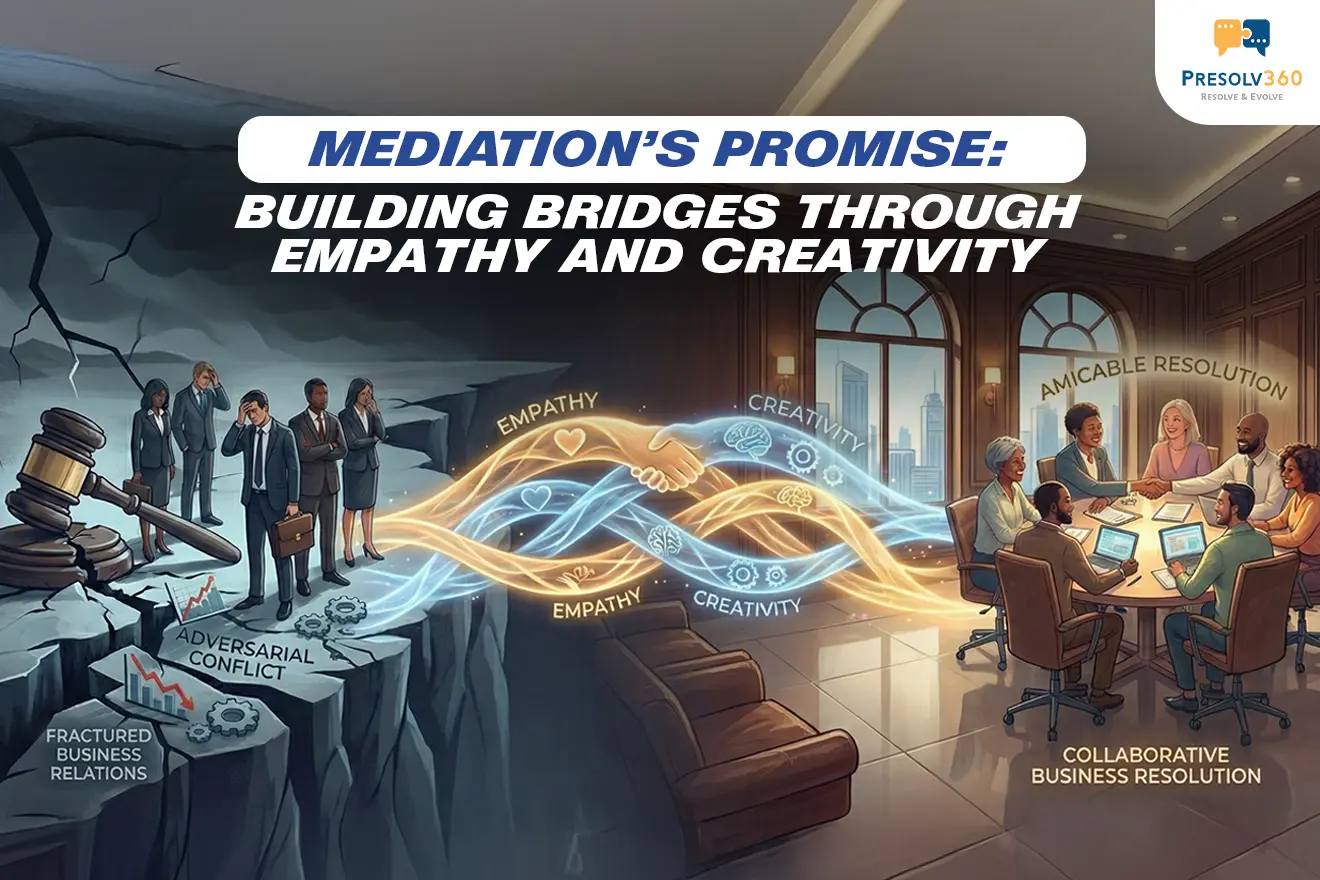
The Hon’ble Chief Justice of India, Justice Surya Kant, who is an active proponent of mediation, offered a compelling framework for understanding mediation’s power at a recent book launch, where he stated mediation represents not just a settlement mechanism but a transformative process that prioritises empathy, dignity, and creativity in dispute resolution, the value of mediation lies in three things: empathy, dignity and creativity. Adding to it, he further stated that the success of mediation lies in arriving at solutions that preserve an amenable relationship between the parties to a dispute, be it personal or professional.
Rather than focusing on the adversarial battles of the courtroom; and harping on victories and defeats, Justice Kant’s vision calls for rethinking the black and white approach to justice and instead genuine justice should be focused on preserving human relationships. He poignantly asks: “What does justice feel like for the ordinary Indian? Is it about winning a case in court regardless of time and money invested, or is it about ending a dispute with dignity intact and a sense of contentment?”
Justice Surya Kant describes India’s justice system as undergoing a “quiet but powerful transformation” from adversarial adjudication to empathetic problem-solving. He states: “The true purpose of law lies not in perpetuating conflict, but in restoring social harmony.” This vision transcends legal technicality as it represents a moral evolution toward what Justice Kant describes as “compassion, consensus, and the healing power of justice.”
The essence of this approach is captured in his statement: “Law is at its best when it builds bridges, not walls.” Mediation becomes the mechanism through which law fulfils this bridging function, connecting disputants not to victory but to reconciliation.
Mediation in Action: Mediation for Nation Campaign
The Indian judiciary, backed by progressive legislation and institutional frameworks, is now advocating Alternate Dispute Resolution mechanisms and Amicable Dispute Resolution methods specifically mediation not as a secondary option but as a legitimate, powerful first resort for resolving disputes. The development of Online Dispute Resolution (“ODR”) infrastructure, enactment of the Mediation Act, 2023, and the strategic initiatives like “Mediation for Nation Campaign”, which was conducted from July to September 2025 across courts nationwide, demonstrated remarkable outcomes. In Delhi alone, over 28,000 matters were referred for mediation, with 4,316 successfully settled within just three months. This represents a significant victory with thousands of disputes being resolved amicably, many of which within families and commercial relationships that might otherwise have fractured under prolonged litigation. These movements signal India’s commitment to fundamentally reimagining how disputes are resolved across different sectors of the economy and society.
Expanding mediation: going beyond the commercial disputes’ horizon
While commercial disputes have been presented as the best use case for mediation, Indian jurists have advocated for its widespread adoption across diverse sectors. Recently, Justice B.V. Nagarathna has recommended a comprehensive and sector-wide adoption of mediation. While speaking at the 2nd National Mediation conference, she emphasized the pivotal role mediation plays for resolving conflicts and advocated for the adoption of mediation in cases of environment, healthcare, intellectual property, corporate governance, public contracts, and even Juvenile Justice Act matters.
Justice Nagarathna stresses mediation’s unique suitability for complex environmental challenges. She proposes Mediation Council of India (once established) must consider establishing a specialized panel of accredited “green mediators.” These individuals would require a unique skill set, combining expertise in mediation techniques with a deep understanding of environmental law, climate science, public policy, and socio-economic impact assessment.
She illustrates mediation’s advantage by stating a mediation settlement in a pollution dispute could include not just compensation, but also commitments to habitat restoration, the establishment of joint monitoring committees, or community benefit-sharing agreements.
For corporate and startup disputes, she states a founder dispute resolved in weeks rather than years could mean the difference between success and collapse. She recommends making mediation clauses standard in Founders Agreements, Shareholder Agreements, and Term Sheets.
Juvenile Justice and Restorative Justice
Justice Nagarathna champions victim-offender mediation in juvenile justice cases. She states: “To truly give effect to the principles of restorative justice in the proceedings of the Juvenile Justice Boards, tools such as victim-offender mediation (VOM) need to be more regularly employed. In contrast to merely negotiating a settlement between parties, VOM can be a safe space for fostering dialogue between victims. It is a duty of the criminal justice system to give space to victims to express the impact of the harm they have suffered, and the juvenile offender to understand the real-world consequences of their actions, take responsibility, and express remorse.”
She emphasizes that such mediators require specialized training: “The training of mediators for dealing with children in conflict with law must be trauma-informed and must incorporate principles of child psychology and restorative justice facilitation.”
Mediation: catalyst for Amicable Dispute Resolution
The “Mediation for Nation” campaign under Justice Surya Kant’s Leadership mobilized resources and public engagement. The remarkable achievement of settling thousands of pending disputes, including cases waiting years for closure, has proved beyond doubt that mediation can break the cycle of judicial delay and restore trust in the justice system.
Simultaneously, Justice BV Nagarathna and other judicial voices have supported widespread sectoral adoption of mediation, demonstrating how dignity, empathy, and adaptability make mediation uniquely suited for addressing disputes across government contracts, environmental challenges, intellectual property, healthcare, corporate governance, and restorative justice.
Digital innovation through ODR is accelerating this expansion with significant examples SEBI’s ODR Portal and MSME delayed payment platform, demonstrating that ADR mechanisms strengthened by technological infrastructure, can deliver speedy, equitable, and accessible justice for millions.
Having said that challenges persist resulting in hinderance in adoption like lack of public awareness, cultural, and institutional resistance, yet despite these obstacles, India’s trajectory is clear. The contemporary landscape in the Indian legal system shows a developing acceptance of the mediation movement in India, reflecting a collective commitment to justice that heals rather than being adversarial. If steered correctly mediation can become not merely an alternative but a genuine bridge to civic harmony and individual dignity.